Cut by robots. Engineered by software. Approved by rules.
Factories can already cut a house to the millimetre with a fraction of the industry's material waste. What they can't do is engineer a thousand houses at once. Every project still passes through a human engineer, an authoring tool, and a permit process that starts from scratch. We automate that layer.
The factory is not the bottleneck.
Robotic timber fabrication is a solved industry. The factory takes a project, digitises it stud by stud, and ships an ID-marked kit on pallets in assembly order. Material waste falls far below the industry norm.
That capability exists today, and it can be replicated in factories anywhere in the world. The constraint sits upstream.
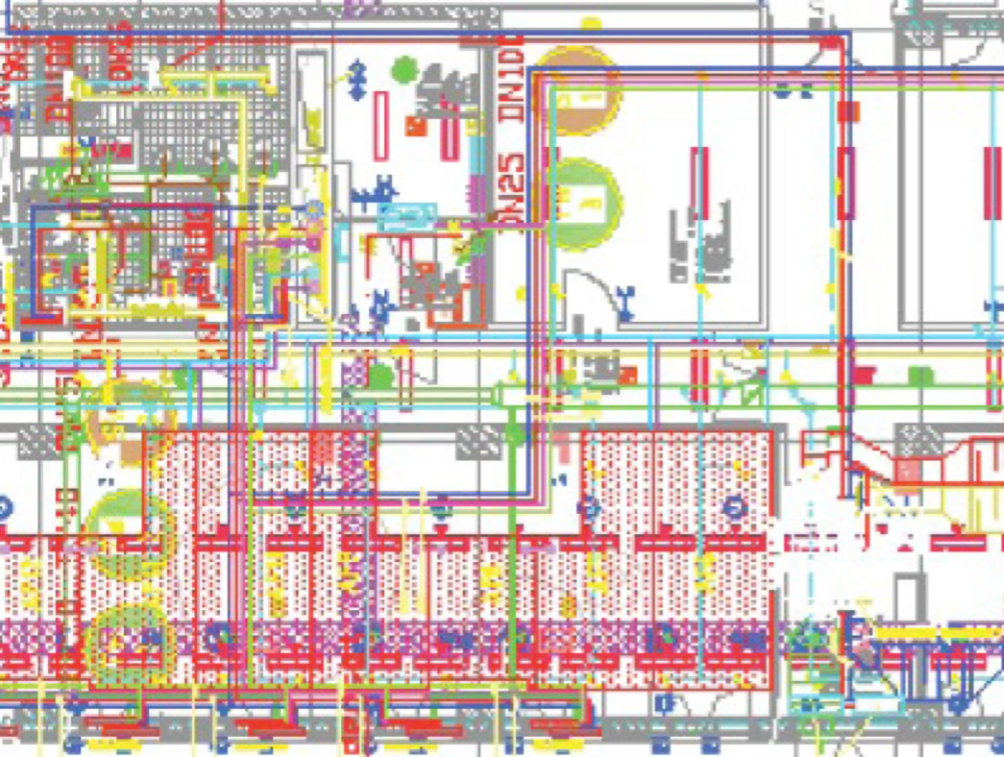
Each project still requires an engineer to model it by hand in an authoring tool, a services designer to route ducts through a structure that was never designed to accept them, and a permit application assembled document by document against a code that differs in every canton, county and municipality.
The marginal cost of cutting the thousandth house is near zero. The marginal cost of engineering it is not.
What actually stands between a factory and a million homes.
Structural engineering per project
Every house is re-engineered from zero. A qualified timber engineer models the structure, resolves every joint, and exports production data through a proprietary authoring tool. It works, and it does not scale: the throughput of the whole system is capped by the number of engineers who can do this well.
Building services and HVAC
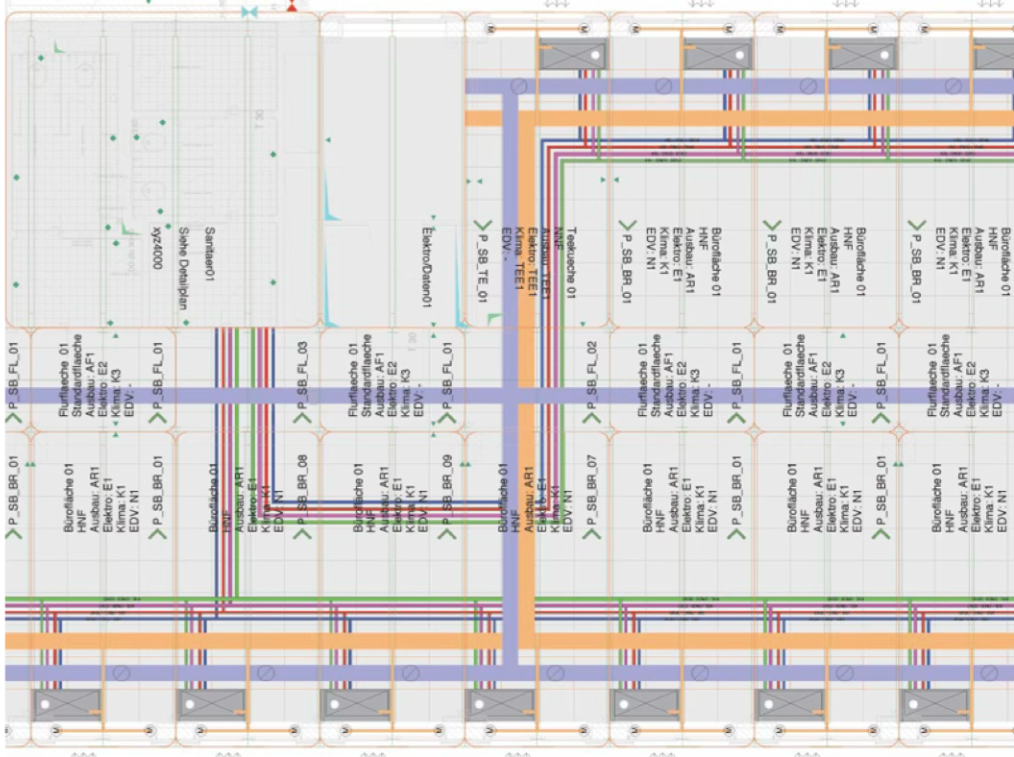
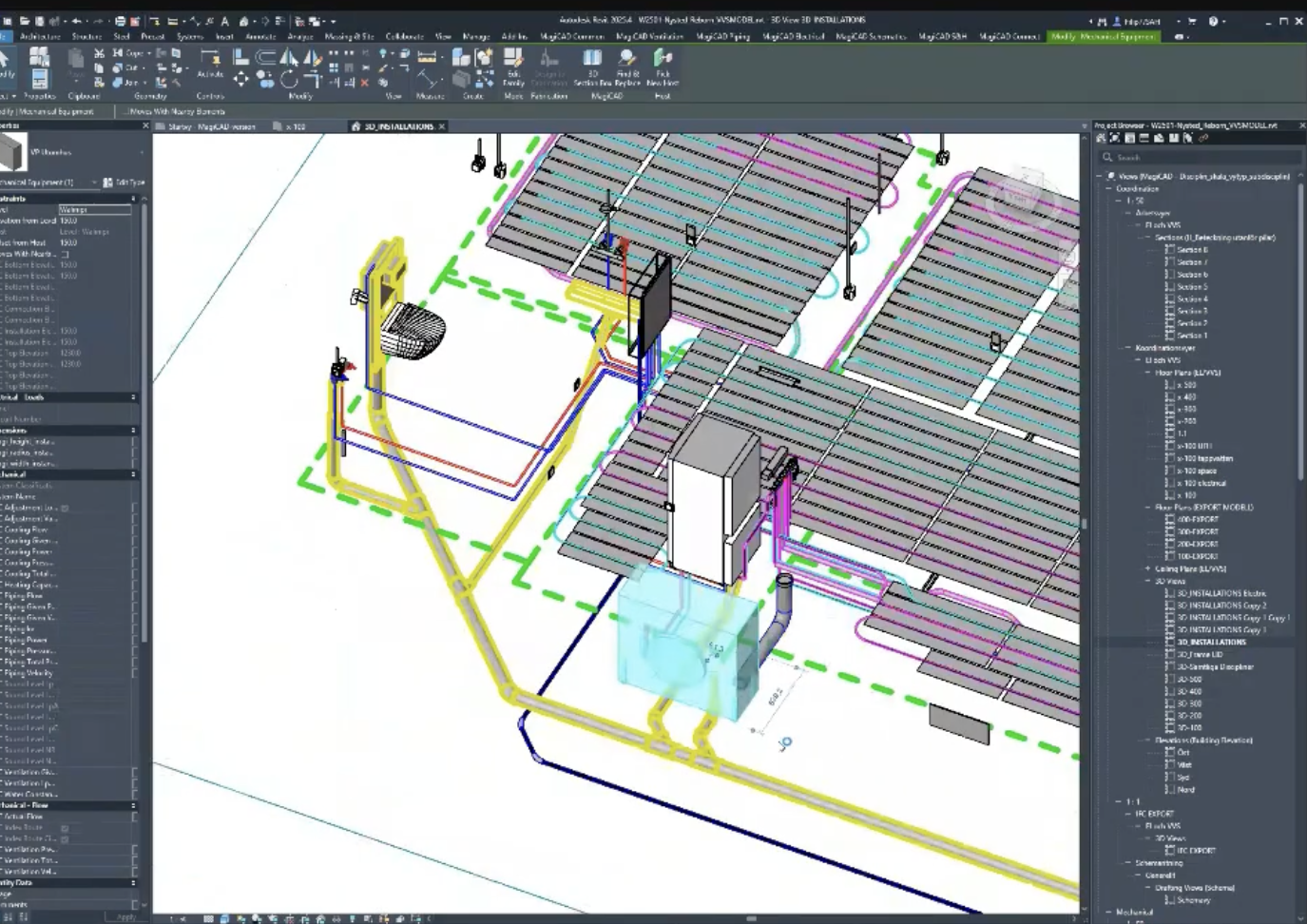
Structure is designed first, services are threaded through afterwards. Every penetration is a negotiation, every route a one-off, every clash a delay. In timber this is worse than in steel or concrete: you cannot drill wherever you like, and airtightness and moisture behaviour are not forgiving.
Standards, local law and building permits
A design that is compliant in Jutland is not compliant in Zürich. Fire, energy, acoustics, accessibility, structural code, local zoning: hundreds of requirements, expressed in prose, re-checked manually on every project by people reading PDFs. This is the hardest of the three, and today the least automated.
Encode the engineer, don't replace them.
The knowledge needed to engineer a timber house is repetitive, well-bounded and already written down — in codes, in typical details, and in the heads of people who have been generating CNC machine code for decades. That is not a research problem. It is a formalisation problem.
A rule-based engineering engine.
Built together with specialists in computational timber fabrication: the people who have industrialised file-to-factory pipelines for some of the most complex timber structures ever built. Their working method is exactly this — turn engineering intent into parametric rules, and turn rules into machine code.
IFC-Lite as the output format.
The engine writes a minimal, strictly-defined IFC subset directly. No Archicad. No Revit. No licence, no authoring session, no engineer clicking through a UI. A model that any downstream tool — structural check, fabrication, quantity take-off, permit review — can read, because it is an open standard rather than a vendor file.
Machine code, not drawings.
Production data comes out of the same pipeline that produced the model. One source of truth from rule to robot.
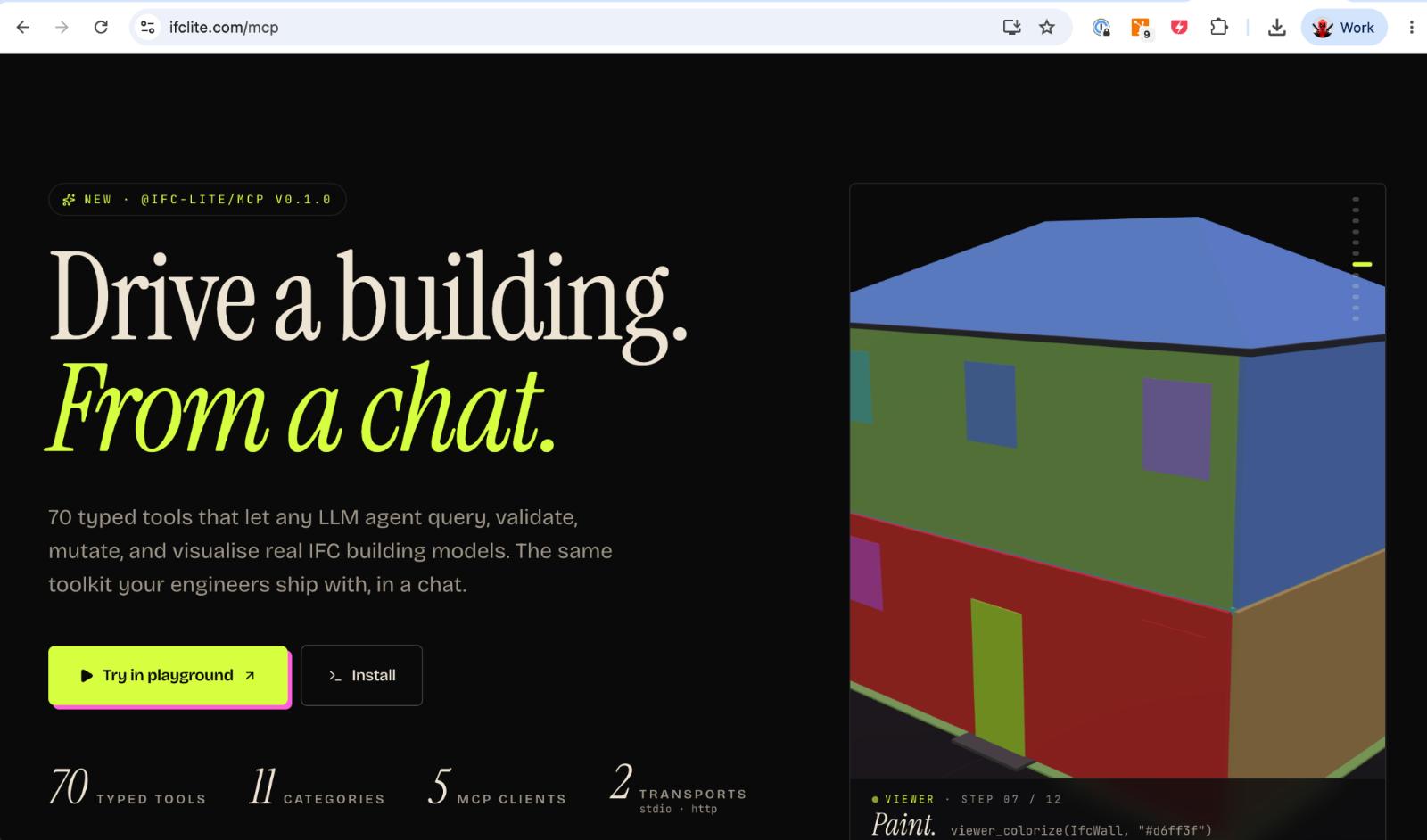
The output isn't a picture of a building. It's a machine-readable building.
Fritz Haller solved this in steel. We're moving it to timber.
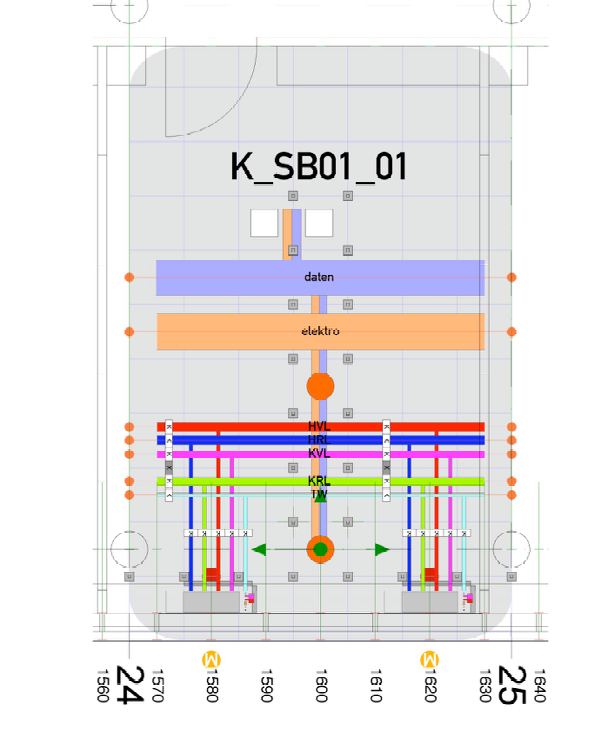
In the 1960s and 70s the Swiss architect Fritz Haller built systems — MINI, MIDI, MAXI, and the ARMILLA service grid — on one principle: don't route services through the structure, design the structure to carry services. Installation zones, hierarchies and clearances were fixed in advance, so any layout of the system was serviceable by construction.
The idea was correct and the systems were built. What was missing was the ability to combine the parts computationally. That part is now trivial.
Puzzle tiles.
Define a finite set of timber tiles — floor, wall, roof, service-riser, wet-cell — each with fixed geometry, fixed service zones, and a fully engineered set of interfaces. Each tile is engineered once, checked once, approved once. Then reused indefinitely.
Arranging is the second automated step.
Once tiles are guaranteed compatible at their interfaces, laying out a building becomes a combinatorial problem, not an engineering one. Same engine, same output: IFC-Lite.
Services designed in, not fitted after.
Because each tile already contains its service zone, HVAC routing stops being a design task per project and becomes a consequence of the layout.
Modularisation and constraint propagation are what machines are good at. Haller's systems were waiting for this.
Nothing here needs to be invented.
Real fabrication experts.
Not a research group. Specialists who have been writing CNC machine code for complex timber for as long as the technology has existed, and who industrialise geometry for a living.
A proven simplification method.
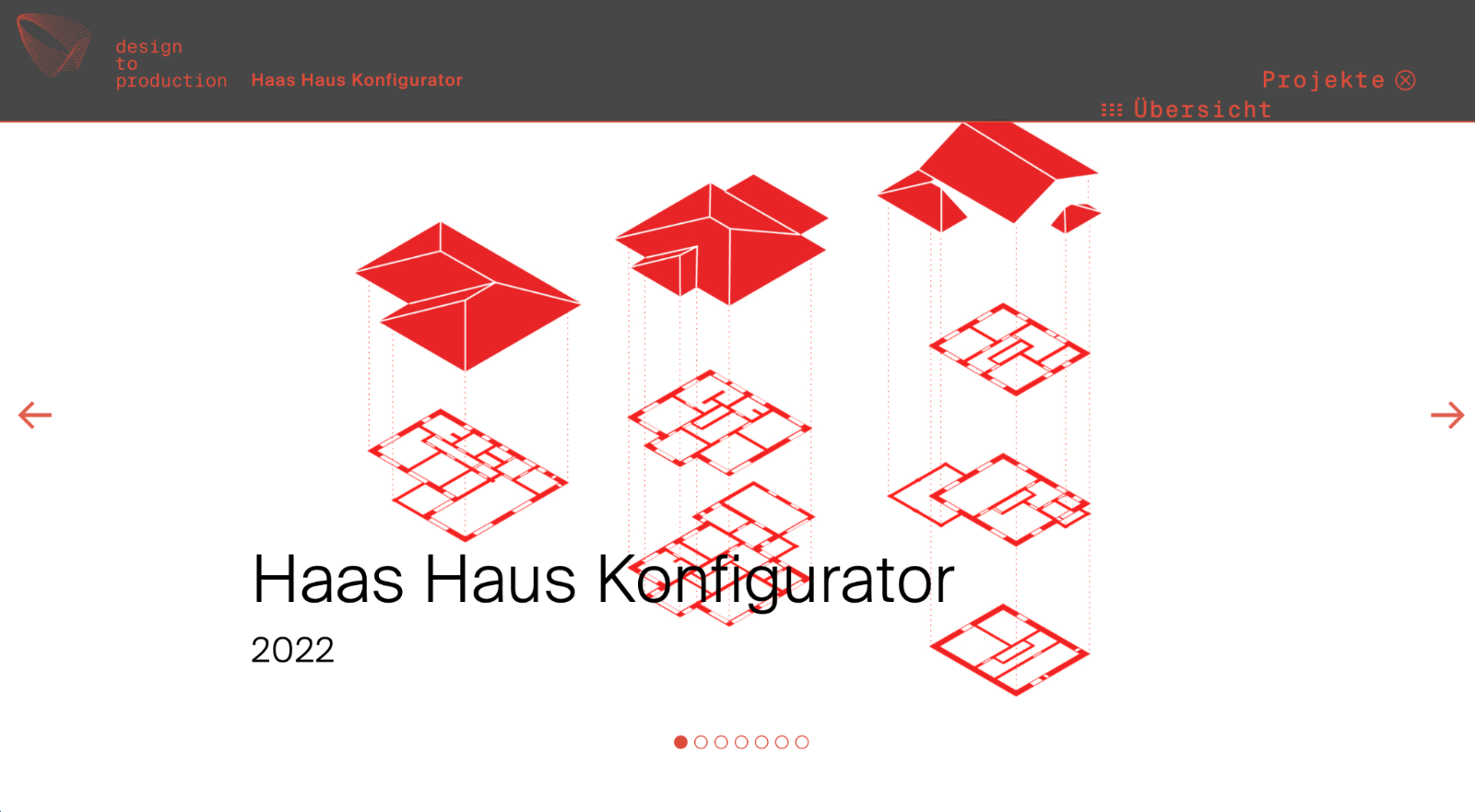
Haller's systematisation — fixed grids, fixed interfaces, solved-once components — is the same principle modern AI systems rely on: reduce the space, then search it. It was validated in built work decades ago.
An open standards backbone.
IFC, ISO 19650, and machine-checkable requirements. Open formats mean any factory, any country, any downstream tool. Vendor lock-in is the enemy of a distributed factory network.
A deep expert ecosystem.
Both problems sit inside mature communities — timber fabrication and building services — with people who have done this at scale and can validate every rule we encode.
Concept, orchestration, delivery.
We provide the concept. The system architecture: rule engine, tile library, IFC-Lite schema, and how they connect to existing factories.
We organise the work. Assembling and coordinating the specialists across timber fabrication, building services and standards — and holding the technical thread between them.
We build the prototype. A working prototype in six months.
We productise it. Service-as-a-software, used by factories and developers. Ruleframe could be a joint venture with Woodstock.
We are not proposing another authoring tool, another BIM plugin, or another AI that generates renderings. We are proposing to remove the per-project engineering bottleneck so that a distributed factory network can actually run at volume.
Six months to a working prototype.
One typology, one factory, one jurisdiction. Proven end to end, then widened.
Service as a software, for a factory network.
Licensed per project or per m², used by factories that already have robots and lack engineering throughput.
The first deployment is Woodstock, the joint-venture partner: engineering capacity stops being the ceiling on their order book.
Then the network. The same engine serves any factory in any country, because the output is an open standard and the rules are jurisdiction-parameterised.
The tile library compounds. Every tile engineered, checked and approved once is an asset that never needs re-engineering.
Robots made the cutting cheap. Rules make the engineering cheap. That's when affordable prefab becomes real.
We know how to build. We like to partner up to build it with you.
Factories with robots and an engineering ceiling. Timber fabrication specialists. Services engineers who have wanted to design services in rather than fit them after. Developers who need a hundred units, not one.